
The Complete Guide to Styling Blankets — From Sofas and Beds to Walls and One-Room Apartments, Decorating Ideas to Transform Your Space
Blanket styling refers to methods of incorporating blankets into a room not just as "functional fabric" but as "decorative interior pieces." Draping them over a sofa, placing them on a bed, or hanging them on a wall—all take just seconds and can change the impression of a room more easily than buying new furniture. This article summarizes styling methods for various scenes, from sofas and beds to walls and studio apartments.
Why one blanket can change a room's impression
There are three reasons:
1. Adds color. The majority of a room's impression is determined by color. Adding just one color to a room based on white or beige changes the entire atmosphere. Blankets allow you to easily increase the "area of color" without repainting walls or buying new furniture.
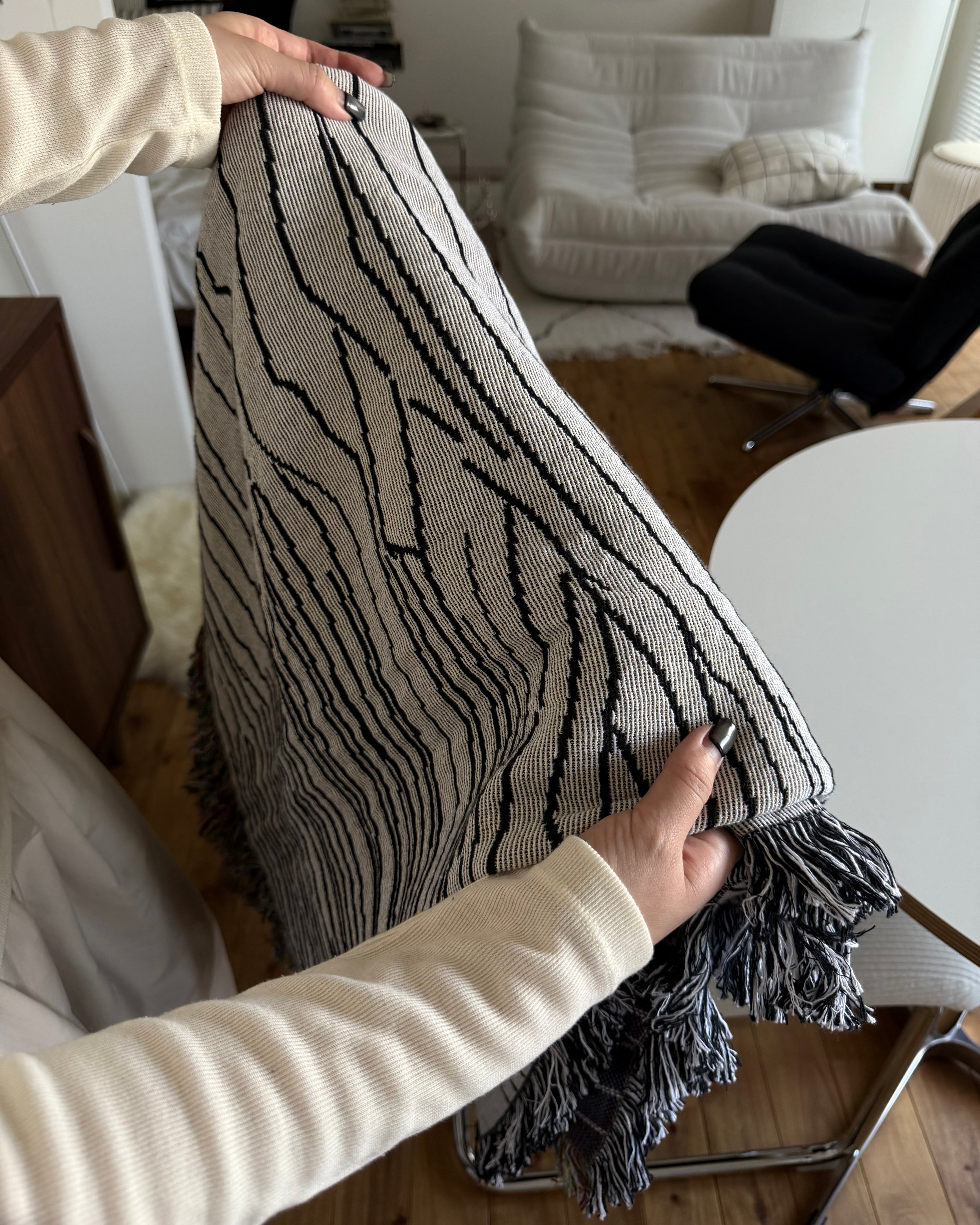
2. Adds texture. Jacquard-woven blankets express patterns through woven threads, creating a three-dimensional effect and shadows that prints don't have. Introducing fabric texture into a flat space adds depth to the room.
3. Creates a focal point. A basic principle of interior design is to create a "spot that draws the eye first when entering a room." Art blankets are works of art in themselves, so simply placing one creates an immediate focal point.
What's more, you can redo it as many times as you like by simply changing its placement. Among redecorating methods, this is one of the most foolproof.
Styling around the sofa
The easiest place to incorporate a blanket is on the sofa. There are three main ways to drape it:
Draped over the backrest — This displays the pattern prominently, ideal for showcasing the design. A contrast between the sofa and blanket colors will make both stand out.
Folded and placed on the armrest — This creates a neat and tidy look. The trick is to fold it so your favorite part of the pattern is visible. It's also practical, as you can grab it quickly when you want to use it.
Casually placed on the seat — Intentionally laid out in a relaxed way. Its natural, "in-use" appearance adds a warm, lived-in feel to the room. Placing it to show the fringe emphasizes its fabric quality.
If you're unsure about color, you can't go wrong by choosing a blanket that's either a "different tone" or a "contrasting color" to your sofa. Coordinating with similar colors creates a calm impression, while contrasting colors make the blanket the focal point.
Styling around the bed
Since the bed occupies most of the bedroom's area, what you place on it largely determines the room's impression.
Foot throw — Draped horizontally at the foot of the bed, a common hotel style. Simply adding a patterned throw to plain bedding instantly makes the bedroom look more put together. An L-size (160x200cm) will reach the edges even on a double bed.
Draped diagonally — For a less formal look, try a deliberately casual diagonal drape. This creates a sophisticated, effortless impression.
Covering the entire bed — As shown in the photo, using it as a bedspread allows the pattern to be seen most fully. Since it's reversible, flipping it over can give the same bedroom a completely different feel.
Decorating walls — the tapestry option
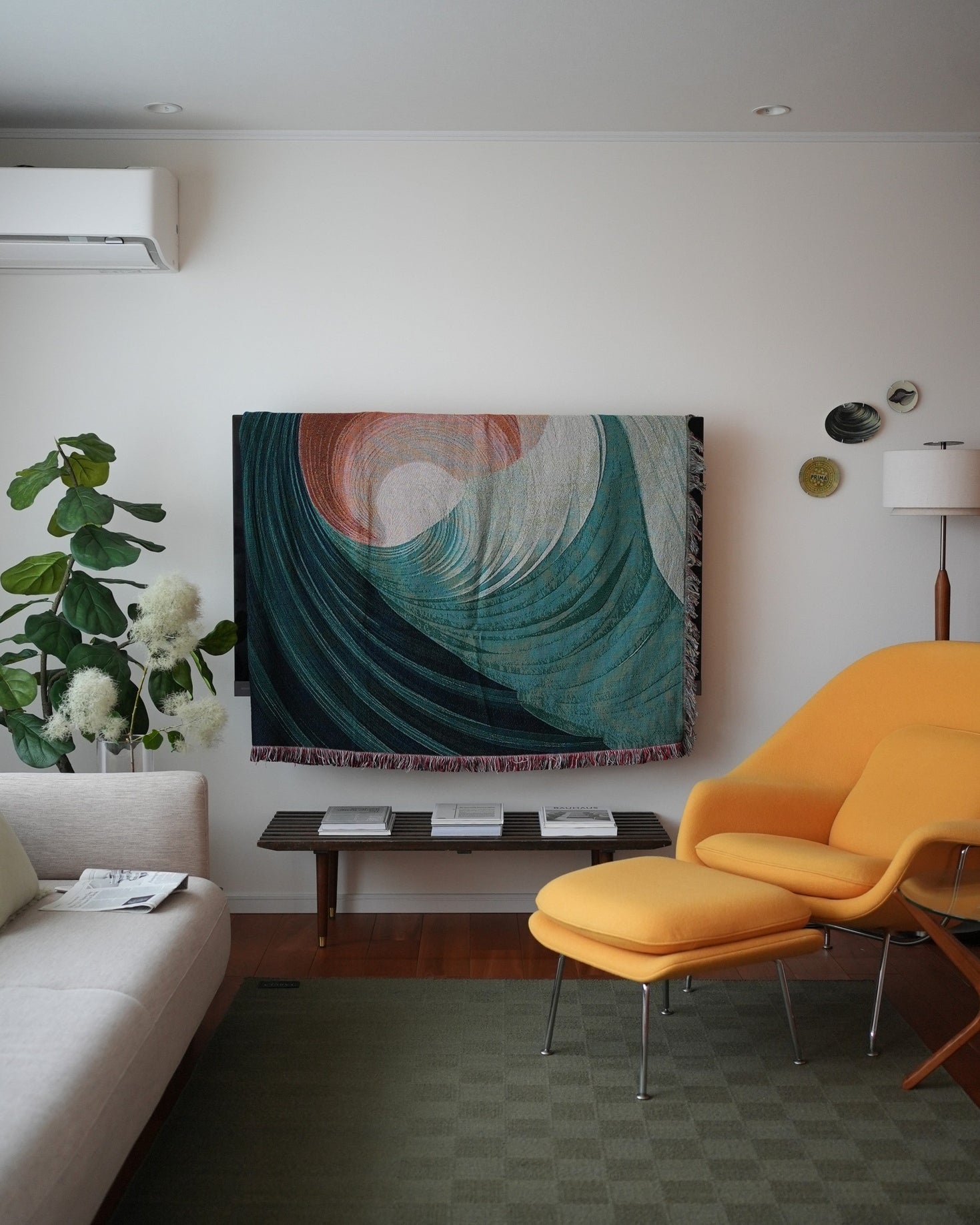
Hanging a 130x160cm (M size) fabric on the wall creates a presence incomparable to posters or art frames. While filling the same area with framed art would be quite expensive, a single blanket completes the wall.
There are various ways to hang it, such as using a blanket hanger or ladder rack, or threading it through a tension rod. There are methods that allow you to decorate without drilling holes in the wall, even in rental properties. Detailed instructions are compiled in our guide on how to display it as a tapestry.
The biggest advantage of wall display is that you can "decorate and use it anytime." When guests arrive, simply take it down as a lap blanket. The blend of art and utility is what makes art blankets so interesting.
How to incorporate blankets in single-person households and studio apartments
"I feel like my room is missing something, but I don't know what to add"—this is a common concern in single-person apartments. Houseplants require care, and large art pieces are intimidating to display. That's when a blanket comes in handy.
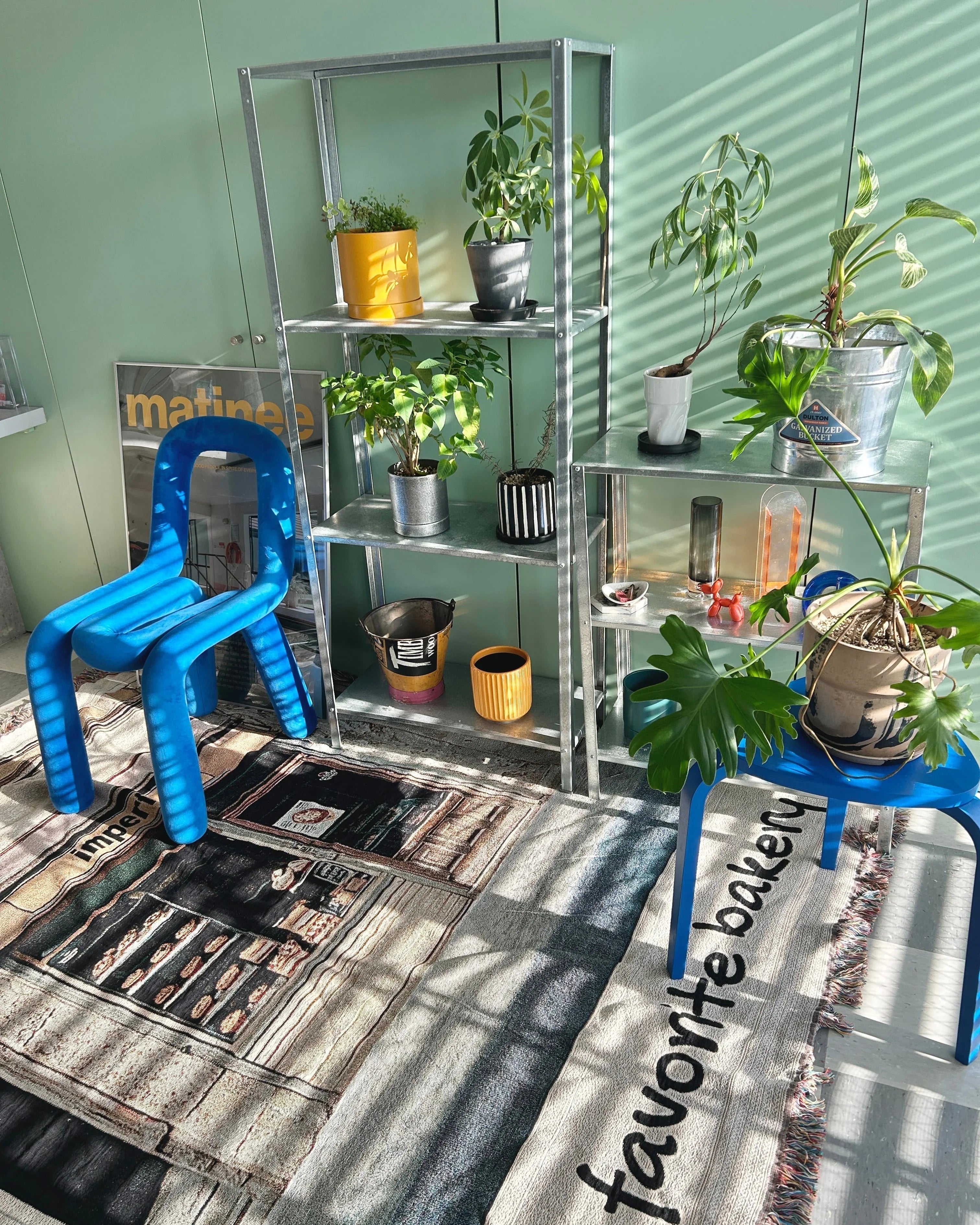
There are three reasons why blankets are suitable for studio apartments: they don't take up floor space (unlike furniture, they don't require dedicated placement), they are multifunctional (lap blanket, sofa cover, bed accent, tapestry), and they are easily changeable (just switch them out when you get tired of them).
The M size (130x160cm, approx. 1kg) is recommended. It's light and easy to handle, and won't create a sense of oppression in a small room. If you primarily use your bed, an L size (160x200cm) is better. For more details, please refer to our size guide.
Choosing seasons and designs
The basic rule for choosing a design is to match it with the room's base.
For simple rooms with a white or grey base, abstract patterns with color movement stand out. For natural rooms with lots of wooden furniture, warm designs like illustrations or photo prints blend in well. In monochrome rooms, choosing graphical black and white designs can create a sense of unity.
Swapping them out seasonally is also recommended. Bright or cool colors for spring/summer, and calmer tones for autumn/winter. All iMPeRF blankets are reversible, so simply flipping them over changes their impression. For more details, refer to the guide on enjoying reversibility.
iMPeRF's art blankets come in 29 designs. They are 100% cotton jacquard weave, M (130x160cm) is ¥18,880, and L (160x200cm) is ¥28,880 (as of July 2026). They are fine to display, use, and wash. Why not change your room's scenery with a single blanket?
Choosing by color — coordinating with your room
Once you've decided on the placement, it's time for color. Because blankets cover a large area, they can shift a room's color scheme with a single piece. There's no need to overthink it; there are only two ways to choose.
One is to stick to analogous colors. Choosing a tone similar to your sofa or rug softens the outlines and makes the room appear larger. Ivory with a beige sofa, monochrome in a grey room. This option is less prone to mistakes.
The other is to go with contrasting colors. Introduce a saturated piece into a room dominated by white walls and achromatic furniture. The eye will stop there, creating a focal point in the room. This is a quicker way to change the impression without adding more items.
If you're unsure about coordination, count the colors already in your room. If there are more than three, go with analogous colors; if two or fewer, go with contrasting colors. That alone will determine the direction.
In a natural wood-toned room, patterns with subtle variations in beige or green will blend in well. In a monochrome room, black and white marble or text patterns will fit seamlessly. For rooms with many colors, conversely, a single item with a restrained pattern works best. With 29 designs available, you can choose by working backward from your room's tone.
Frequently Asked Questions
Q. Can I hang it on the wall in a rental apartment?
A. Yes, you can. There are several methods that allow for restoration to original condition, such as threading it through a tension rod, leaning it against a ladder rack, or using hooks that don't make holes in the wall. Since it's light (approx. 1kg for M size), heavy-duty hardware is not required.
Q. Which size is recommended for single-person households?
A. M size (130x160cm) is recommended. It's light and easy to handle, suitable for use on a sofa, as a lap blanket, or hung on the wall. If you want the bed to be the focal point of your room, L size (160x200cm) is more suitable.
Q. How do I choose a color that matches my sofa?
A. The basic approach is to choose a color that is either a "different tone of the same color family" or a "contrasting color" to your sofa. If you want a calming effect, go with analogous colors; if you want the blanket to be the centerpiece, choose a contrasting color. If you're unsure, select a design that has a color connection to existing colors in your room (like rugs or curtains) for a cohesive look.
Related Products